Intro: The Vertical Imperative
Generic products are fine for mass-market needs. Industry-grade products require domain knowledge. Logistics, FinTech, and HealthTech each have its constraints, patterns, and compliance requirements. Building for an industry means speaking its language and solving its problems at scale.
Why Verticalization Matters
Vertical apps have specialized workflows, regulatory requirements, and integration needs. It is not enough to build software; you must build for the specific friction points of the sector.
Industry Examples and Their Constraints
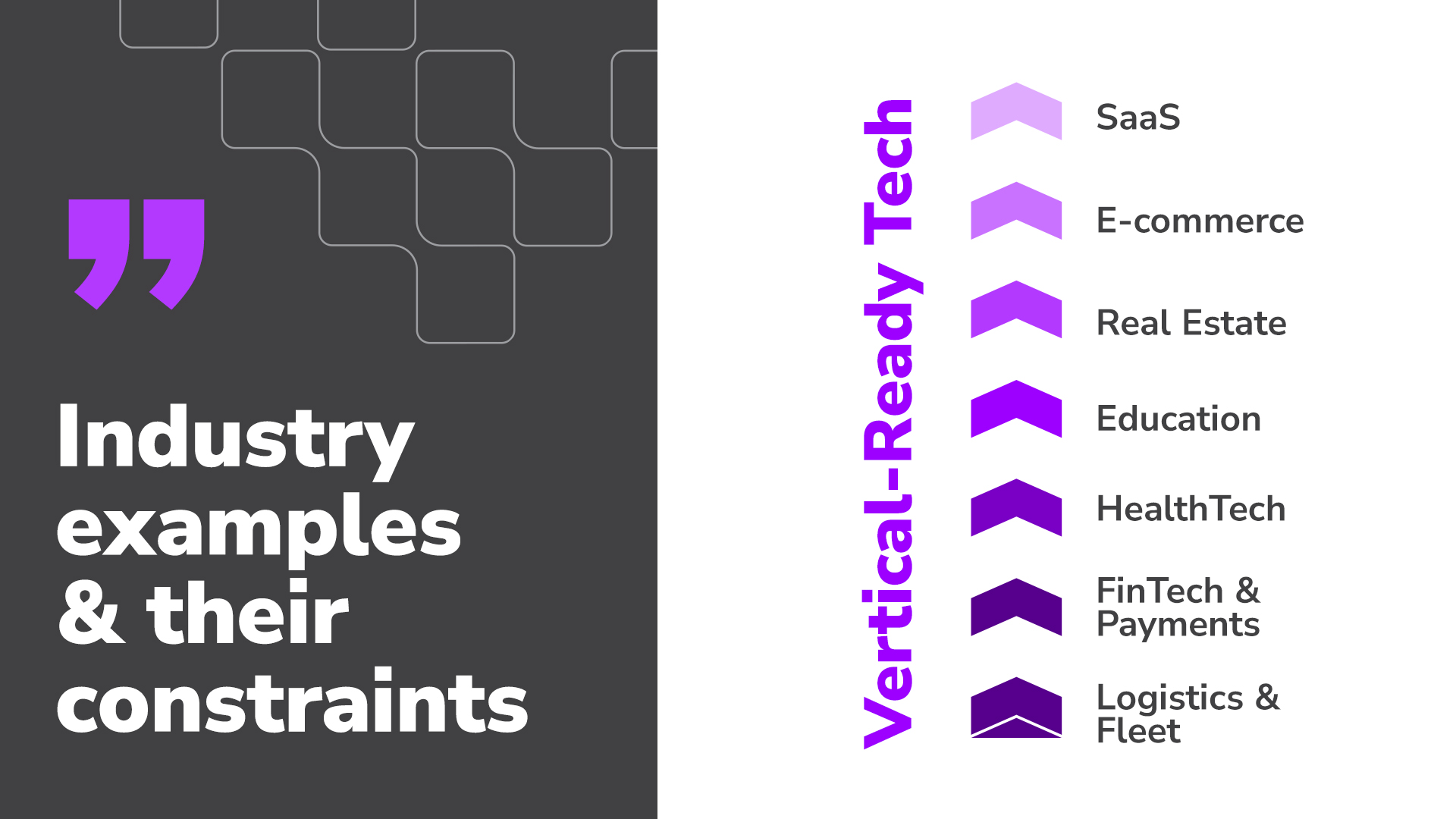
- Logistics & Fleet: Requires real-time tracking, geospatial routing, and optimization under strict time windows.
- FinTech & Payments: Demands rigorous compliance, settlement guarantees, fraud prevention, and multi-currency accounting.
- HealthTech: Centered on data privacy (HIPAA), medical device integrations, and complex patient flows.
- Education: Focuses on personalization, learning pathways, proctoring, and data privacy for minors.
- Real Estate: Heavy on document workflows, escrow management, virtual tours, and listings syndication.
- E-commerce: Needs omnichannel inventory management, latency-sensitive checkouts, and payment resilience.
- SaaS: Built around multi-tenancy, flexible billing models, and extensibility via APIs.
So the engineering approach changes
When the requirements are specialized, a generic feature-first mindset fails. Success requires a domain-first approach, deeply embedding industry logic into the architecture itself.
Regardless of the constraint or the sector, Fluxion adapts. We don’t force a generic tech stack onto a specific problem; we tailor the engineering approach to match the unique reality of your industry.
Fluxion’s Approach
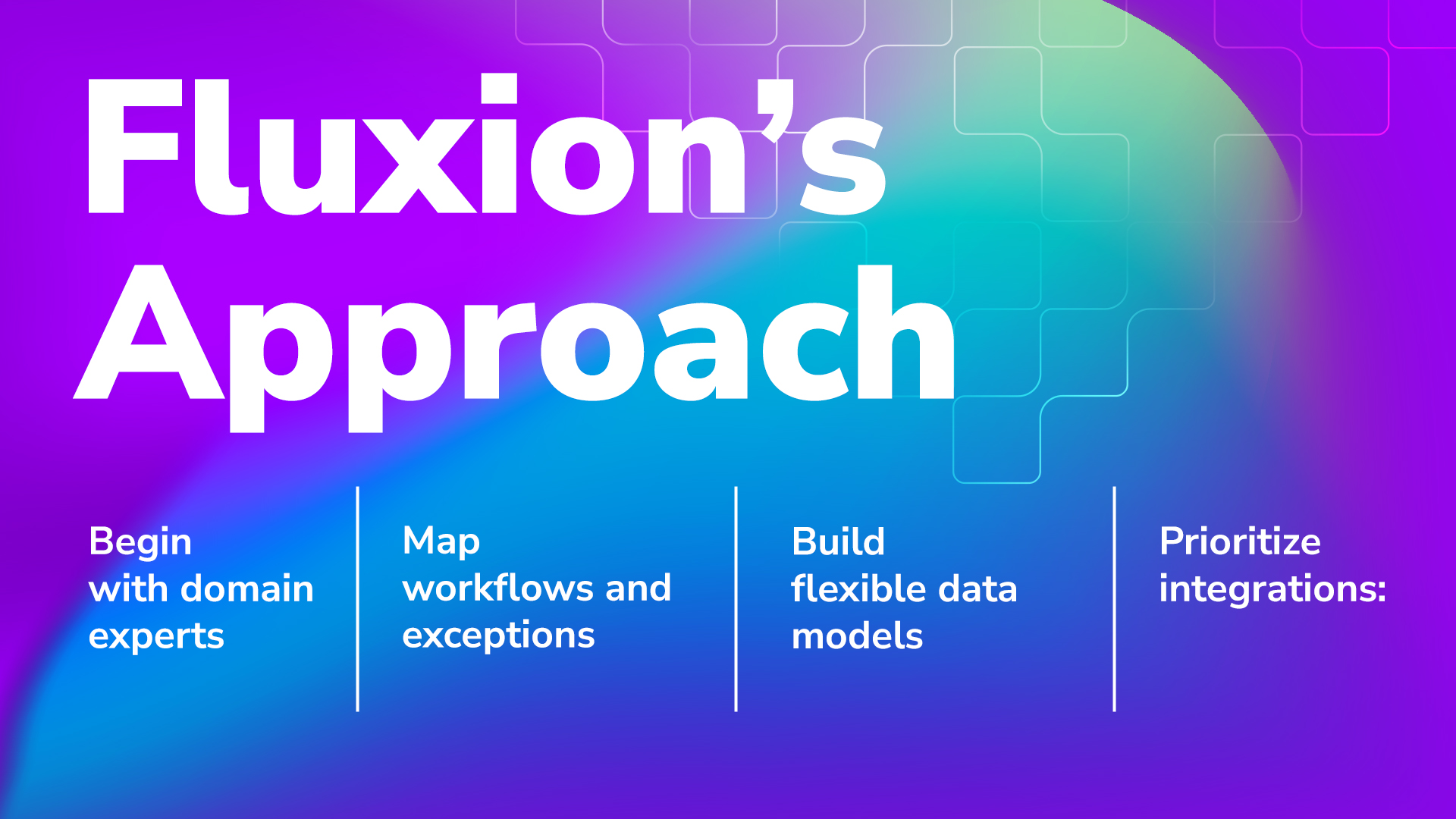
At Fluxion, this is our operational standard. We prioritize the domain model above all else through the following steps:
- Begin with domain experts: We start with deep subject matter interviews to understand their business nature and process before writing a single line of code.
- Map workflows and exceptions: We model exactly what should happen, while rigorously mapping every exception and edge case to ensure the system handles real-world complexity.
- Build flexible data models: We design data structures that are robust enough for today's needs but flexible enough to evolve as the industry changes.
- Prioritize integrations: We focus early on connecting with industry-specific systems (e.g., EMR for HealthTech or Core Banking for FinTech) to ensure seamless interoperability.
Built on Proven Standards
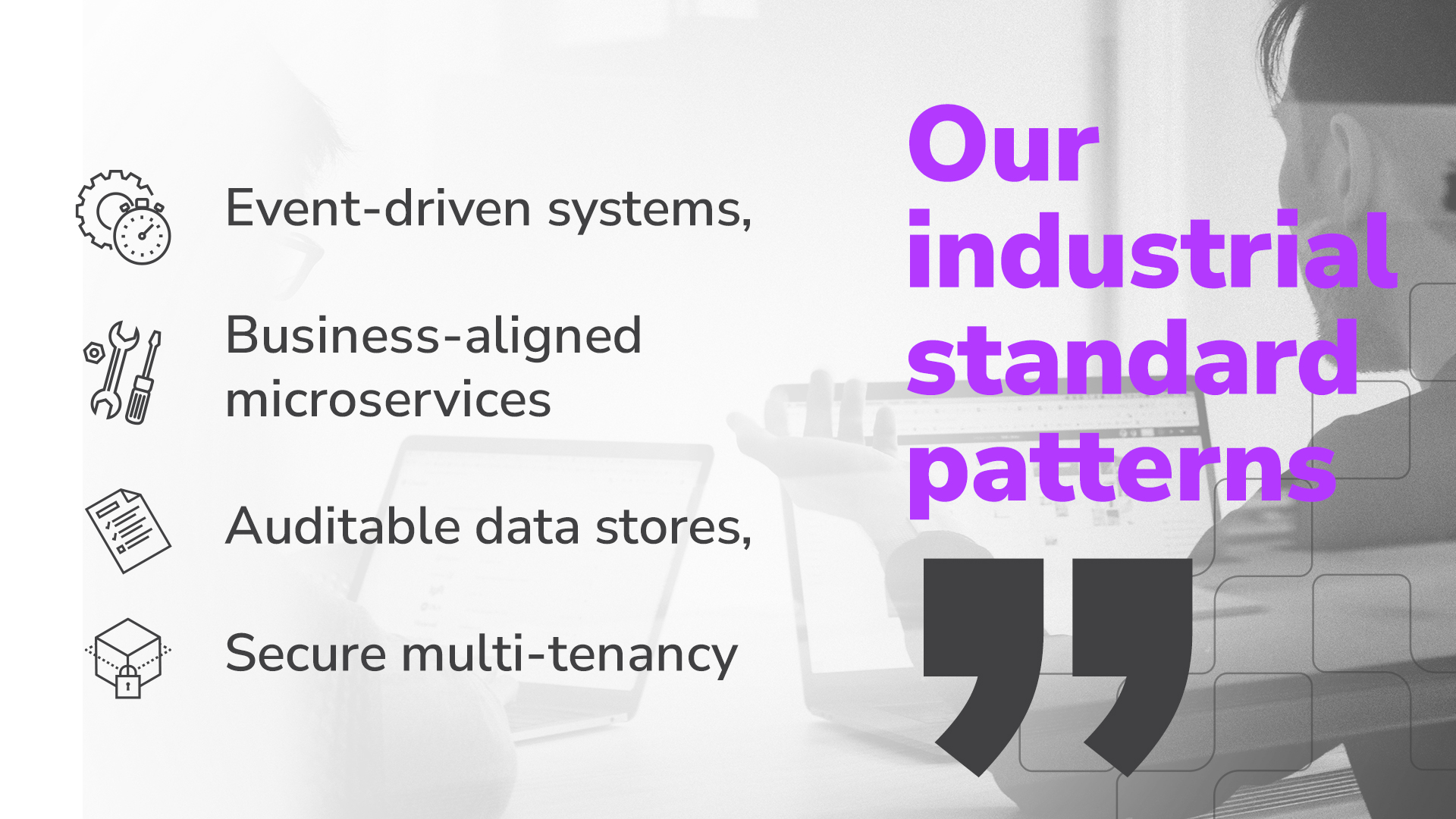
To deliver high-quality products and minimize risk, we don't build from scratch. We rely on industrial standard patterns that ensure stability and security:
- Event-driven systems: Because industries move fast, we build systems that react in real-time rather than waiting for batch updates.
- Business-aligned microservices: We don't just split code arbitrarily; we align technical boundaries with your actual business capabilities, making the system easier to maintain.
- Auditable data stores: Compliance is non-negotiable. We ensure strict data traceability, creating a permanent record that satisfies regulators.
- Secure multi-tenancy: We enforce strict data isolation and role-based access, ensuring that while users share the platform, their data remains private and secure.
Conclusion: We handle the complexity, so you can handle the business.
Ultimately, vertical applications are defined by their rigorous patterns and strict compliance needs. This is where Fluxion steps in to take care of our business partners.
We don't just build features; we shoulder the responsibility of these technical constraints. By ensuring your software is compliant, secure, and industry-aligned from day one, we give you the freedom to focus on what matters most: growing your business.